fo / en

Author: angela@liv.fo

  • Market update for mars 2026

    Market update for mars 2026

    What has happened in March and up to mid-April?
    While global equities fell by a full 5% in March, all of this decline—and more—was recovered in the first weeks of April, so global equities are now up by just over 2.5% so far this year.

    While energy and defensive stocks performed best during the downturn in March and cyclical and technology stocks performed worst, the roles have reversed in April.

    Short-term interest rates have risen significantly this year and long-term rates somewhat less, and therefore both short- and long-term bonds have delivered negative returns of around -1% so far this year. Corporate and high-yield bonds have followed the ups and downs of the equity markets since year-end and are now at a total return of around 0%.

    Energy prices rose sharply in March, while many metal prices—including gold—first fell and then increased again.

    Why? The war in Iran is completely driving the markets—for now
    News flow about developments in the war between the US/Israel and Iran, changes in oil prices, and risk assessments related to stagflation have completely driven all movements in global financial markets.

    In the coming weeks, investors will likely also look more closely at company earnings reports from around the world, which show how financial performance has been in the first three months of the year. This could also affect prices in both directions.

    Three scenarios for the war in Iran – investors lean toward the positive ones
    Many financial institutions work with different—typically three—scenarios for how the war in Iran may develop. These vary somewhat between institutions but are roughly as follows:

    1: Gradual de-escalation, quick recovery
    The ceasefire becomes a frozen step toward gradual de-escalation. Shipping through the Strait of Hormuz returns to normal within a month, oil prices stabilize at $80–90, stock markets—and especially price-sensitive stocks—rise, interest rates fall and the euro strengthens, but nervousness remains due to fear that the conflict could escalate again.

    2: Continued restrictions, gradual improvement
    It takes several months before shipping normalizes, and Iran continues to control the Strait of Hormuz, so uncertainty remains high. Oil prices stay around $110–120, central banks cannot cut interest rates. Stocks may rise, but only modestly and with considerable volatility, led by high-quality stocks.

    3: Continued conflict and closure of the strait
    The conflict continues, the strait remains closed for several more months, oil prices surge to $150–180 and significantly weaken global growth. The focus of economic policy shifts from fighting inflation to supporting growth and employment. Central banks cut rates significantly, and investors move toward recession-oriented investments such as energy and defensive stocks, safe bonds, and USD and CHF.

    The positive trend in markets indicates that global investors still expect scenario 1, and that we have therefore likely already seen the worst price declines in this cycle.
  • Market update for february 2026

    Market update for february 2026

    What happened in February?

    Global equities rose by 2.1% in February, but with significant volatility. Many stocks saw daily price swings of 5–10%, which is unusual. The shift away from the U.S. and technology stocks continued, but reversed again in early March, which has also led to noticeable declines in stock prices. After several strong months, Danish equities fell as much as 9% in February—primarily due to Novo.

    Interest rates declined somewhat in February, resulting in fairly good returns across all types of bonds. However, in early March, rates have risen slightly again, and the dollar has strengthened after a weaker period. Oil prices continue to rise, while prices for precious and industrial metals have fallen again, though they remain highly volatile at elevated levels. Cryptocurrencies continue to decline.

    Why? Tech uncertainty and war in the Middle East, and risk of economic stagnation

    Initially, massive artificial intelligence investments by tech companies made an impact on the markets. Investors are concerned about whether these large investments will be profitable. If not, some of the world’s largest companies could face difficulties.

    At present, however, markets are largely driven by developments in the conflict between the U.S./Israel and Iran—particularly the impact on oil prices and the risk of economic stagnation occurring alongside rising inflation.

    Geopolitical instability also tends to hit markets with heavy speculation and high levels of leveraged investments. When these are affected by falling prices, it can trigger forced selling of other assets to cover losses, which in turn can lead to further declines. The largest stock market drops have been seen in Asia and Europe, which are more dependent on imported energy than the U.S., which is self-sufficient. Many stable, so-called defensive stocks in sectors like food and beverages, healthcare, and utilities have performed best during the turbulence.

    The situation in the Middle East and its impact on financial markets

    Financial markets are primarily focused on how the conflict may affect global energy prices, but also indirectly fertilizer and food prices. A large share of raw materials is extracted in the region and must pass through the Strait of Hormuz. It is estimated that 20% of global oil production and up to 40% of key raw materials for fertilizers are transported through this critical passage.

    Most geopolitical experts and financial institutions expect the conflict to be short-lived, with limited and temporary effects on oil and gas prices, equities, and interest rates.

    However, if the conflict drags on or significantly impacts key energy infrastructure—limiting the supply of oil or liquefied natural gas (LNG)—oil prices could quickly rise to $100–120 per barrel. In that case, we could be facing a serious economic shock—similar to the downturn following Russia’s invasion of Ukraine in 2022 or the oil crises of the 1970s. This would mean a negative shock that reduces consumers’ purchasing power, slows economic growth, and increases inflation.

    Such a scenario would be negative for both equities and bonds and would particularly impact many countries in Europe and Asia, while oil-producing nations such as Norway, Brazil, and Russia would benefit. That is why all attention is currently focused on developments in the Middle East, especially what happens to oil prices.

  • Information about 2025

    Information about 2025

    2025 Was a Challenging Year in the Financial Markets

    In 2025, the performance of almost all investment groups was satisfactory.

    However, global equities performed worse, and since this part makes up the largest share, it negatively affected the return in 2025.

    LÍV is compared with Danish pension funds. A prerequisite for this comparison is that the investment composition of LÍV and the Danish pension companies is similar. Therefore, three years ago LÍV began updating its investment strategy, where the benchmark for comparison was based on a customer with medium risk and more than 15 years remaining until retirement age.

    Looking at the overall picture, these changes moved the results in the right direction—especially in 2024, when the return for a customer with medium risk was above 10%. But in 2025, the performance of global equities was worse—partly because the U.S. dollar weakened relatively significantly. This affected last year’s return, which ended at 1.77% for a customer with medium risk. That is not satisfactory.

    LÍV evaluates returns monthly, so the 2025 result did not come as a surprise to the company. This knowledge has led LÍV to make changes to the investment composition. For example, the composition of the High Yield (corporate bond) investment group has been adjusted, and in 2025 LÍV also began purchasing passive investment funds (index funds) that follow the market and partly hedge against U.S. currency risk.

    Investments in Real Estate

    In recent years, LÍV has also invested in so-called “alternative investments”, such as real estate or private equity. As the only pension fund in the Faroe Islands, LÍV builds rental apartments, but it takes a long time to get this type of investment underway, and therefore they initially affect returns negatively.

    The company has a goal of building about 100 rental apartments by summer 2027. It is expected that 64 will be rented out by September 2026, while 22 apartments, built together with Bústaðir, have been on the market for about a year.

    However, these investments ensure value growth in pension savings over the long term and benefit Faroese society. Therefore, LÍV is pleased to be an active participant in the Faroese housing market.

    Fundamental Differences

    The performance of selected global equity investment funds has not been as good as LÍV had expected. As a result, in 2025 LÍV also began purchasing passive investment funds that follow the market.

    However, there are some differences between LÍV and its Danish competitors. This is shown in the 2025 evaluation and in the years before.

    One difference is that Danish companies hedge against currency risk in the U.S. dollar. LÍV has not used this approach because it has a built-in cost. In the first half of 2025, this created a difference in returns of 2.9% compared with a company that hedged against currency risk.

    Another difference is that LÍV’s investments have not been as strongly tied to the M7 technology stocks.
    M7 stands for the “Magnificent 7” and refers to shares in the American technology companies Alphabet, Amazon, Apple, Meta, Microsoft, Nvidia, and Tesla, which had unusually high returns in 2025.

    These stocks carry high risk because investments are concentrated in only a few companies. They make up more than one third of the S&P 500 index, and if their value falls, the impact can be significant.

  • Market update for january 2026

    Market update for january 2026

    Modest returns in January

    Global equities rose 1.6% in January. The reason is that investors moved their money out of American and technology stocks and instead invested in Emerging Markets, smaller companies, and sectors such as energy, raw materials, and industry.

    Danish equities delivered solid returns for the third consecutive month but have fallen somewhat again at the beginning of February due to renewed uncertainty in the global equity markets.

    All bonds also posted small gains in January. Meanwhile, the dollar weakened somewhat, while the oil price increased. Prices of several gemstones and industrial metals continued to rise significantly, but in recent weeks there have been sharp price declines.

    Why? Strong earnings figures, geopolitical calm, and declining inflation

    The first earnings reports from the US, Asia, and Europe for the fourth quarter of 2025 showed better results than expected, and the outlook for 2026 is also somewhat better than anticipated.

    In addition, Trump carried out another so-called TACO (Trump Always Chickens Out). This means that he threatened various measures in connection with Greenland, Denmark, and trade with the EU—only to later withdraw the threats. This has created greater geopolitical stability. However, Trump’s many attacks on US allies are increasingly causing international investors to turn their backs on the US and American equities.

    Inflation in the EU and the US continued to decline around the turn of the year, which is positive for both bond and equity markets.

    More market unrest at the beginning of February – turbulence in the tech sector

    The very strong performance in financial markets at the end of January has become more uncertain at the beginning of February.

    Metal prices have fallen significantly—especially silver and gold—as have cryptocurrencies and many stocks, particularly technology shares.

    There are three reasons for this:

    Unrest in the tech sector: Investors have become uneasy because tech giants are making significantly larger investments in artificial intelligence than expected. This is also reflected in the latest earnings reports. There are also concerns that AI solutions could in the future undermine the revenues of software companies.

    Doubts about the US economy: Weak labor market figures this week have raised doubts about the strength of the US economy and thus about companies’ earnings prospects for the rest of 2026.

    Very optimistic investors: Investors have been extremely optimistic, and many have taken on more risk than usual. These investors have been forced to close some positions and sell, which has led to further price declines.

    No one knows how long the market turbulence will continue or how severe a potential downturn could become. The downturn may also already ease in the coming weeks.

    In the coming weeks, investors will focus in particular on the latest growth and inflation data from the US, additional earnings reports and announcements from the tech sector—and whether Trump manages to restrain himself and avoid creating new international political unrest, for example in connection with Iran.

  • Market update for october 2025

    Market update for october 2025

    Progress in both stock and bond markets in October

    The performance on the stock market has been good since April, and it continued in October with a return of a solid four percent. Since this time last year, global stocks have risen by 8.8 percent. This is mainly due to the performance of stocks from emerging markets, from Japan, and from technology and biotech stocks—especially the large Magnificent-7 stocks in the USA. Danish stocks grew by 3.5 percent but are still slightly behind and are negative for the entire year, mainly due to the decline in Novo stocks. Non-investment grade stocks are also, on the whole, slightly behind the market performance, although health-related stocks are seeing increased interest from investors.

    The interest rate drop in the USA led to slight positive returns on bonds in October—both on government, mortgage, and corporate bonds. The best returns, however, were once again on bonds from high-yield countries. The return in October was 1.9 percent, which is 10.6 percent higher compared to this time last year.

    The price of metals set a new record in October but then reversed and ended up falling at the end of the month along with cryptocurrencies. Oil prices remained low, while the dollar strengthened.

    Why? Satisfactory earnings, biotech optimism, trade truce, and shifts

    Many strong earnings reports for the third quarter helped sustain the positive momentum in the stock markets. Confidence in the growth of the biotech industry was also confirmed with larger investment plans in the most recent earnings reports from major US tech giants.

    The year-long ceasefire in the trade war between the USA and China has also made a positive impact. In recent weeks, large and numerous private equity investments have been shut down, which has created some uncertainty in the stock market. Fewer positive signals from the US Federal Reserve have also played a role. The Chairman of the Federal Reserve, Jerome Powell, has clearly indicated that he believes investors expect fewer interest rate cuts from the Fed in the coming year.

    The US government shutdown has led to several key economic data points, which could indicate how things are going in the US, being released later than usual.

    Although uncertainty has increased, most still trust in a soft landing for the economy as a macroeconomic scenario. This is the so-called “Goldilocks” scenario, where both the stock and bond markets perform well.

    Investors will, therefore, be closely watching whether rising inflation or slowing growth will disrupt the current positive momentum.

  • Market update for august 2025

    Market update for august 2025

    A Peaceful August with Small, Positive Returns

    In August, market movements were very small — both in the stock, bond, and currency markets, as well as in commodity prices. In the bond markets, yield curves became even steeper, meaning the difference between short-term and long-term interest rates increased.
    Short-term rates remained stable, while long-term rates rose slightly. This led to a slight increase in the value of short-term bonds, while long-term bonds saw small negative returns in August. We’ve seen the same trend for much of the year, and as a result, short-term bonds have yielded a return of 1.8% over the past year, while long-term bonds have produced a negative return of -1.3% over the same period.

    When it comes to riskier bonds, investors continued buying both high-yield bonds and corporate bonds in August, which are currently trading at historically low spreads compared to government bonds. This provided good returns — especially high-yield bonds, which returned 1.3% in August and 6.9% over the past year.

    Global stocks returned 0.2% in August, bringing their return over the past year to 1.2%. Stocks from emerging markets — especially in China and Brazil — increased more than 10%. Danish, and particularly Nordic, stocks also performed well last month, but the Danish market has dropped more than 4% since New Year’s — mainly due to Novo’s decline.

    The dollar remained stable, and prices for gold and silver continued to rise, while pressure on the oil price persists.

    Why? Satisfactory Macroeconomic Data, a Dovish Fed, and Political Uncertainty

    Long-term interest rates have risen in recent months, even as more and more central banks are cutting short-term rates. This is unusual, though it has happened before.

    There are three main reasons for this:

    Many countries have financial difficulties and are currently selling large amounts of government bonds. This is the case in the USA, but also in the UK and France, where political uncertainty is also a factor. Investors are unsure whether politicians will get control over debt and large deficits, and are therefore demanding higher interest rates as a kind of risk premium.

    Another reason is uncertainty surrounding the US Federal Reserve — and its independence. President Trump wants to appoint people to the Fed board who support his desire for lower interest rates. This increases the risk of monetary policy becoming too loose, leading to excessive inflation — which has also increased demand for both gold and silver. Prices are hitting new records daily.

    In early September, the pressure on long-term rates eased a bit, because there are signs of a sudden slowdown in the US labor market. Almost no new jobs are being created at the moment, and unemployment is rising. This gives the Fed an opportunity to cut interest rates multiple times in the coming months — a possibility that both Fed Chair Jay Powell and several board members have mentioned.

    However, the weak labor market data in the US has so far had little impact on investors. That’s evident because stock and high-risk bond prices still appear optimistic. Investors seem to believe that the US economy won’t grind to a sudden halt, but is instead in a balanced state where companies can still earn well, while inflation remains low. Good earnings reports from listed companies reinforce this perception.

    On the other hand, skeptics argue that the labor market signals in the US are classic signs of an upcoming recession — a recession that could also drag the rest of the world into an economic downturn, with falling profits, declining stock prices, and falling interest rates — which would then push bond prices higher.

    The conclusion is, as long as investors believe in a soft economic landing as the macroeconomic scenario, the outlook is good for both stocks and bonds. But rising inflation or declining growth could change that.

  • Milestone days at LÍV

    Milestone days at LÍV

    Today is a special day at LÍV.

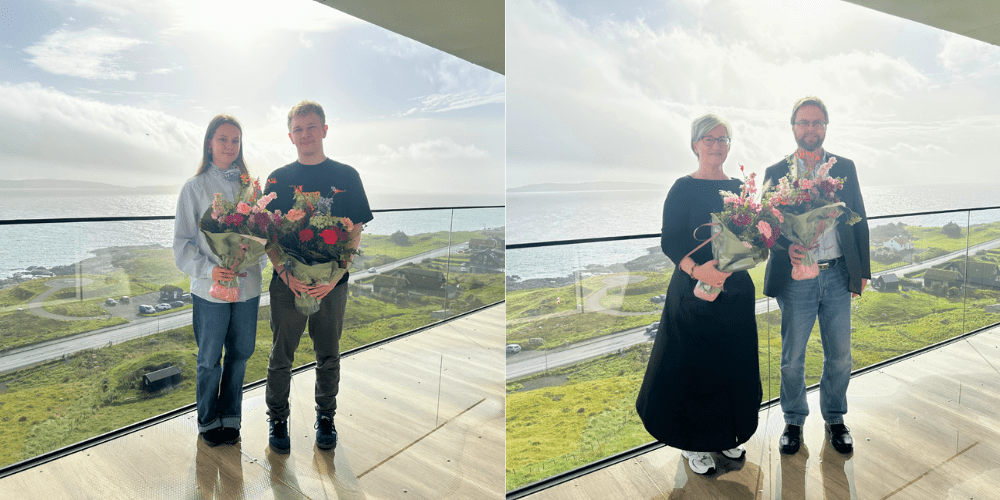
    This morning we had a cozy gathering with Silja, Dánjal, Sunneva, and Óli.

    Our lovely and talented apprentices, Silja and Dánjal, have now completed their training.

    LÍV warmly congratulates Silja and Dánjal on completing their apprenticeships. We are delighted that Silja will continue with us, and at the same time, we wish Dánjal the very best in his future endeavors.

    In addition to this, two of our employees are celebrating work anniversaries.

    Sunneva has worked at LÍV for 40 years, and Óli has worked at LÍV for 10 years.

    We are fortunate and grateful to have such dedicated employees.

    We sincerely congratulate them on their work anniversaries and look forward to many more good years together.

  • Market update for july 2025

    Market update for july 2025

    Stock Market Growth Does Not Reach the Nordic Countries and Denmark – Interest Rates Remain Stable

    The growth in stocks that began in mid-April continued last month, and a strengthened US dollar further boosted returns, resulting in a total return of 4.0% on global equities in July. This also means that the year-to-date return on global stocks has just edged into positive territory. Cyclical or economically sensitive stocks saw the largest gains, while defensive stocks did not rise much.

    Once again, stock market growth did not reach Nordic and Danish equities, which in July had returns of -4.9% and -2.4%, respectively. A notable drop in shares of Novo Nordisk had a particular impact. From the beginning of the year to the end of July, Danish and Nordic equities have declined by about 4%.

    Interest rates continued to fluctuate up and down in July, and the return on Danish government bonds was close to zero as a result. There was renewed interest in high-yield and riskier corporate bonds – over the past year, these have returned between 0.6–1.1% and 2.4–5.5%.

    After several months of decline, the US dollar strengthened in July, which contributed to halting the growth in several commodities such as gold.

    Why? Strong Earnings Reports and Optimism About Growth and Inflation

    The strong returns are primarily due to investors around the world now believing that the global economy will experience a “soft landing” in the second half of 2025 – the so-called “Goldilocks” scenario. This refers to a situation where both growth and inflation are moderately low, so inflation and interest rates remain stable while growth is still strong enough for companies to increase their profits.

    At present, most investors do not believe that Trump’s trade policies will significantly increase inflation in the US. The coming months will show whether this optimism holds. Strong earnings results in the second quarter – especially among American companies and particularly the large tech firms – have also contributed, although the US Federal Reserve’s decision not to cut interest rates had the opposite effect.

    However, profit growth in several sectors has been quite low, which may indicate some growth challenges – both globally and in the US. Lower-than-expected inflation figures, on the other hand, have led many to expect that the US Federal Reserve (Fed) will cut interest rates next year, which has further boosted optimism in the stock market.

    Conclusion, as long as investors continue to believe in a softer global economic outlook, the trend remains positive for both equities and bonds. However, rising inflation or lower growth could impact the current positive trend.

  • LÍV is moving to Óðinshædd

    LÍV is moving to Óðinshædd


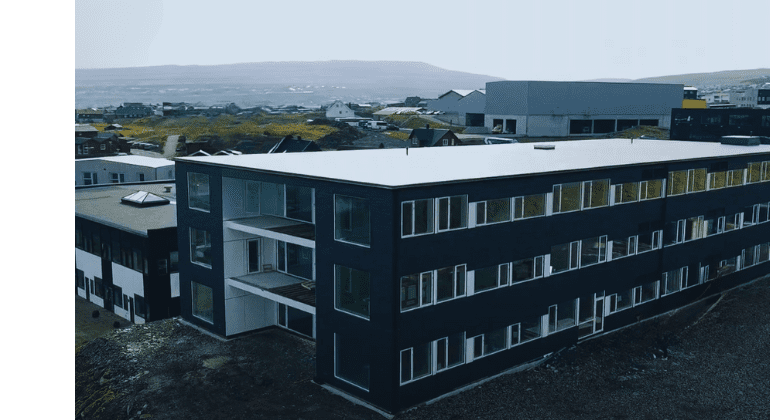
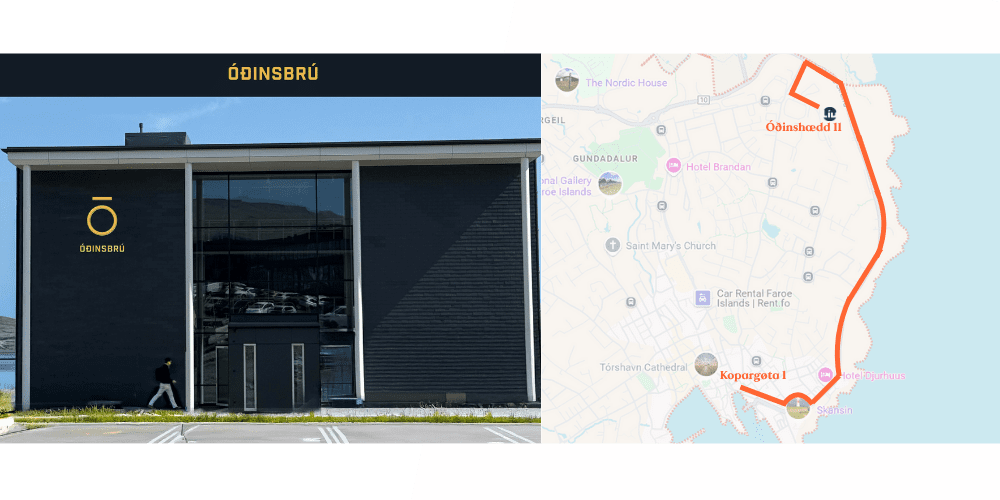
    On July 21, we will be leaving our current premises at Kopargøta 1, where we have been located for many good years. It is with mixed emotions, both gratitude and excitement, that we move on to a new chapter.
    We will be closed for summer holidays from monday, july 21 to friday, august 1

    We will open on August 4 in our new premises at Óðinshædd 11.
    You will find us on the 3rd floor of Óðinsbrú.

    We look forward to continuing to provide you with excellent service in our new and modern facilities.

  • This is the name of the new building on Óðinshædd

    This is the name of the new building on Óðinshædd

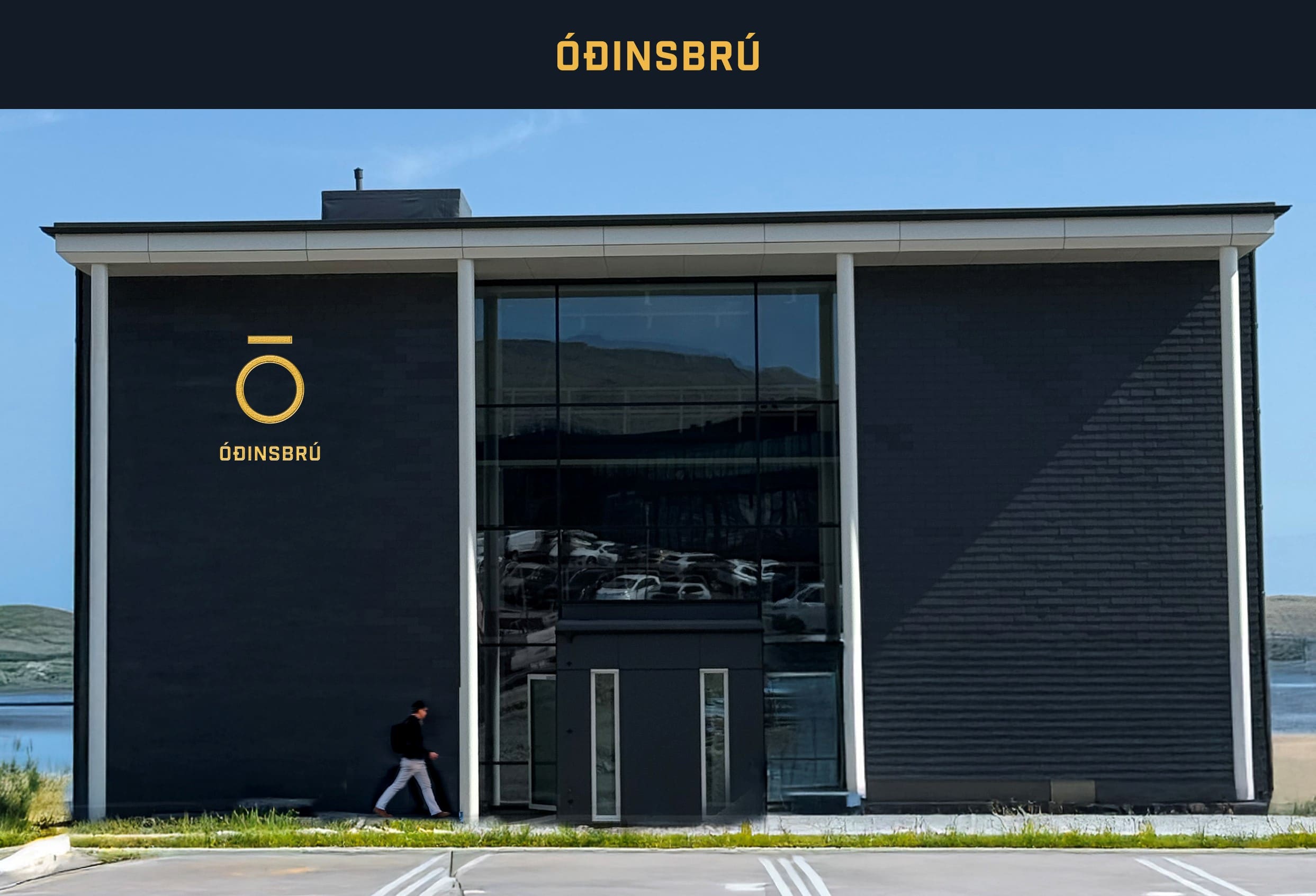
    Today, the insurance company LÍV is announcing the new name and logo of the new building at Óðinshædd. Earlier this year, the company launched a naming and branding contest. After reviewing well over a hundred suggestions, the judging panel has now reached agreement on a new name and logo.

    52 people participated in the competition, and over a hundred suggestions were submitted. Norse mythology — especially the god Óðinn — was a recurring theme among many of the proposals.

    We are overwhelmed by the great interest and want to thank everyone who took the time to send us their suggestions,” says Angela Lindenskov á Bøgarði, marketing coordinator at LÍV.

    The Name

    Although many of the name suggestions were good, none were quite precise enough. The judges had the authority to choose from the pool as they pleased — but they also had the option to select none. Nevertheless, they were inspired by the many great proposals, and from that, a new name emerged.

    “The name is Óðinsbrú, and it fits well with the location. ‘Brú’ is, of course, an old form of the word for ‘bridge’, and the building stands tall on the hilltop, where it somewhat resembles a ship’s bridge. One can imagine Óðinn standing at the helm, gazing out over Nólsoyarfjørður,” Angela explains.

    The Logo

    While no name was directly chosen from the submissions, the logo competition had a different outcome. Among all the elegant logo ideas, one stood out immediately. In its striking simplicity, the logo felt modern, while the classical color scheme gave it a sense of dignity.

    “As seen in the image, the line above the ‘O’ doesn’t slant but is horizontal. This breaks orthographic rules but opens up new interpretations. While a slanted line suggests tension, a horizontal one symbolizes balance, precision, and security — perfectly reflecting the purpose of the building, where Norðoya Sparikassi and we at LÍV will soon be located,” Angela notes.

    Henry á Fríðriksmørk won the logo competition and says the following about the design:

    “Viewed purely as shapes, the logo is simply a circle and a line. Some might think of binary data (zeros and ones), others may see a golden crown and think of money. Perhaps someone even sees a hint of something sacred — like a halo or a royal crown. I wanted the logo to be open to interpretation.”

    The logo will become part of the visual identity of the new building, which will be named Óðinsbrú. And it must be said, the name and logo complement each other well, as together they represent leadership, vision, and security — the very key values of LÍV and Norðoya Sparikassi, who work with life insurance and manage others’ finances.

    “We’ve already grown used to the new name and logo, so now we’re just looking forward to moving in on August 4,” concludes Angela Lindenskov á Bøgarði, marketing coordinator at LÍV.